




 Brunches in greece
Greek food spans millennia of kitchen evolution, marrying fresh Mediterranean produce with age-old cooking styles. Tasting these regional plates reveals how olive oil, wild mountain herbs, and fresh seafood shape the local soul of the Aegean.
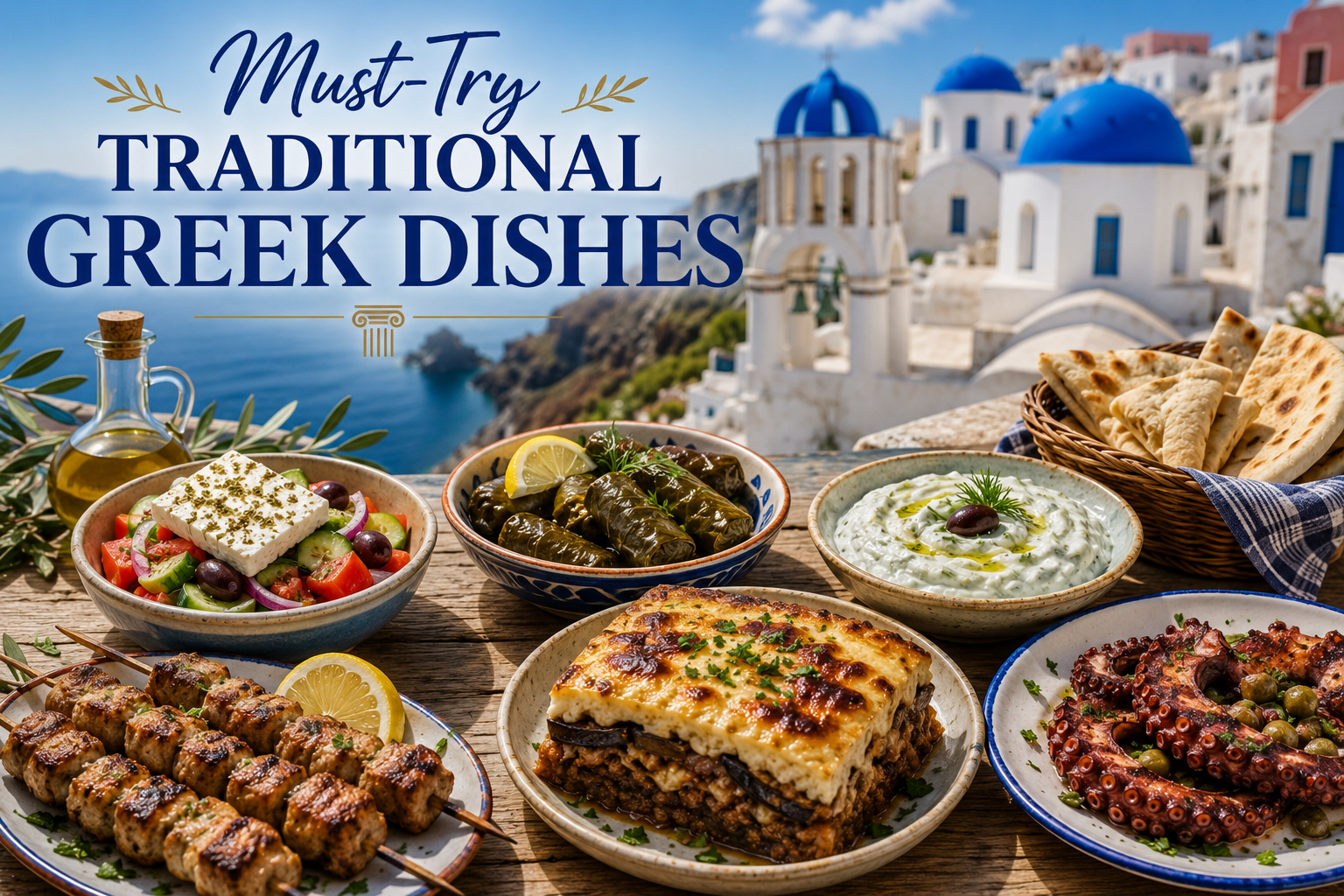
Food lovers hunting for genuine Mediterranean flavors often start their path by tasting Must-Try Traditional Greek Dishes. This guide highlights the key kitchen creations that define the rich heritage of Greek gastronomy.
The Roots of Greek Flavors
Pure simplicity and raw quality power the local gastronomy. Cold-pressed olive oil acts as the backbone of nearly every recipe, pressed from ancient groves that have yielded fruit for generations. Fresh oregano, thyme, rosemary, and garlic provide a fragrant depth that turns humble ingredients into deep dining experiences.
These base ingredients define almost all Must-Try Traditional Greek Dishes, making sure every bite tastes of local history. Seaside villages depend on the daily catch from the Aegean Sea, while mountain clans cook with wild greens, lamb, and rich goat cheeses. This geographic variety creates a regional food scene that is both unified and highly diverse.
Must-Try Traditional Greek Dishes: Iconic Meat and Vegetable Classics
Moussaka rules as the ultimate comfort food of Greece, loved for its hearty layers and deep flavors. The classic version features sliced eggplant, spiced minced beef or lamb, and a thick cap of velvety bechamel sauce. Kitchens typically bake this dish for 45 minutes at 180 degrees Celsius to allow the juices to marry perfectly.
Travelers visiting Athens will find that moussaka remains at the top of every list of Must-Try Traditional Greek Dishes. The modern setup of this plate was popularized by the famous Greek chef Nikolaos Tselementes in the 1920s. His French-influenced recipe remade a rustic village meal into a refined national favorite.

Souvlaki offers a quick but highly satisfying taste of local food culture. This popular street food consists of small pieces of grilled meat served on a skewer or folded in a warm pita. The meat gets steeped for hours in lemon juice, olive oil, and wild oregano to guarantee tender bites.
True souvlaki wraps rely on a specific mix of fresh toppings to balance the rich flavors of the grilled meat.
- Marinated pork or chicken skewers cooked over hot charcoal.
- Warm, lightly oiled pita bread fold.
- Sliced red onions, ripe tomatoes, and fresh tzatziki sauce.
The smoky char of the meat balances the cool, garlic-infused yogurt of the tzatziki.
Seafood and Coastal Specialties
Coastal tavernas offer an exceptional seafood experience that relies on simple cooking to let the natural flavors shine. Sun-dried octopus cooked over hot coals remains a signature plate of the islands. The octopus hangs in the Mediterranean sun for several hours to dry before meeting the grill, which concentrates its natural sweetness.
Grilled octopus represents the coastal variety of Must-Try Traditional Greek Dishes, especially when finished with a splash of red wine vinegar. This cooking method keeps the flesh tender while creating a charred, sweet exterior. Pour a glass of cold ouzo to go with this plate for an authentic seaside meal.
Psari Plaki is another seaside favorite that showcases the local love for baked fish. This recipe features fresh whole fish baked with tomatoes, onions, garlic, and plenty of olive oil. Slow baking lets the fish absorb the sweet, savory juices of the vegetable bed.
Vegetarian and Meze Favorites
Greek kitchens offer a wealth of vegetarian plates that highlight seasonal produce. Spanakopita remains a beloved savory pastry enjoyed throughout the day as a snack or a light lunch. The combination of crisp phyllo sheets and savory filling creates a satisfying contrast.
For those preferring plant-based choices, spanakopita is one of the most popular vegetarian options among Must-Try Traditional Greek Dishes. Preparing it requires a little skill to make sure the fine layers of pastry stay crispy after baking.
- Fresh spinach leaves washed and fully dried to avoid soggy pastry.
- Tangy sheep milk feta crumbled by hand.
- Layers of paper-thin phyllo brushed with extra virgin olive oil.
Dolmades offer another great vegetarian option, showing off the fine art of stuffed grape leaves. These bite-sized parcels are packed with a mixture of rice, fresh dill, mint, and spring onions. They simmer in a lemon broth and are served cold or at room temperature.
Traditional Desserts
Desserts in Greece are sweet feasts that highlight local honey, nuts, and fine pastry. Baklava remains the most famous sweet treat, built with layers of phyllo filled with crushed nuts and sweetened with rich syrup. The pastry is spiced with cinnamon and cloves to create a warm, aromatic profile.
Classic baklava showcases the sweet side of Must-Try Traditional Greek Dishes, offering a rich crunch in every bite. Enjoy this dessert alongside a cup of strong, unsweetened Greek coffee to balance the sugar.

Galaktoboureko offers a different texture, featuring a creamy semolina custard wrapped in golden phyllo. This dessert needs careful temperature management to get the perfect balance between the hot pastry and the sweet syrup.
- Pour cold syrup over the hot pastry right after pulling it from the oven.
- Use fresh whole milk to get a creamy, dense custard texture.
- Serve the dessert warm or at room temperature to keep the pastry crisp.
Adding lemon zest to the syrup provides a bright contrast to the rich custard.
A Regional Guide to Traditional Greek Specialties
Regional twists add exciting variety to the local food scene. Crete is famous for Dakos, a simple rustic dish featuring barley rusks topped with grated tomatoes and mizithra cheese. The hard barley rusk absorbs the tomato juices and olive oil, creating a soft yet textured base.
In the northern region of Macedonia, Bougatsa rules as a breakfast staple. This pastry features a sweet semolina custard or a savory cheese filling wrapped in fine, flaky dough. Street vendors dust the sweet version with powdered sugar and cinnamon before serving it warm.
The Cyclades islands favor slow-cooked dishes like Revithada, a traditional chickpea stew from Sifnos. Prepared in a clay pot and baked overnight in wood-fired ovens, the chickpeas develop a creamy texture. This dish highlights the historic reliance on slow cooking methods to get the most flavor out of simple ingredients with minimal fuel.
Summary of Iconic Greek Dishes
| Dish Name | Key Ingredients | Course Type |
|---|---|---|
| Moussaka | Eggplant, minced meat, bechamel sauce | Main Course |
| Souvlaki | Grilled meat skewers, pita, tzatziki | Street Food / Main |
| Spanakopita | Spinach, feta cheese, phyllo pastry | Snack / Light Meal |
| Baklava | Phyllo pastry, chopped nuts, honey syrup | Dessert |
Gathering at the Table
Eating your way through the diverse food heritage of Greece reveals a deep respect for seasonal ingredients and traditional cooking methods. From the rich layers of moussaka to the simple freshness of Cretan dakos, each dish tells a story of regional pride. These recipes have been passed down through generations, preserving the authentic flavors of the Mediterranean.
Embracing these authentic flavors will reshape your understanding of Mediterranean cooking, making these Must-Try Traditional Greek Dishes a central part of your next culinary adventure. Focus on fresh ingredients, high-quality olive oil, and simple preparations to recreate these dishes at home. Tasting Greek gastronomy is a celebration of community, history, and pure flavor.


Comments are closed